
Is Software.informer.com Safe to Download From? What You Should Know Before Clicking “Download”
Author: Adam Collins
In a Nutshell:
- Software.informer.com appears to be legitimate and generally trustworthy
- It is not flagged as a scam based on available information
- Third-party download sites still carry some risk
- Downloading directly from the software developer’s official website is the safest option
When in doubt, always verify the software before installing it
Software.informer.com is a popular platform where users can discover, download, and update software. The site claims, “Keep your software updated effortlessly with automatic detection, safe downloads, and exclusive giveaways. Trusted by millions of users worldwide.”
That sounds reassuring, but with fake installers and malware-filled downloads all over the internet, it’s reasonable to ask a simple question: Is Software.informer.com actually safe to download from?
Let’s take a closer look.
What is Software.informer.com?
Software Informer is a software discovery and update platform that collects download links for various programs, tools, and utilities. Instead of visiting multiple websites, users can find software in one place, along with version history, changelogs, and user feedback.
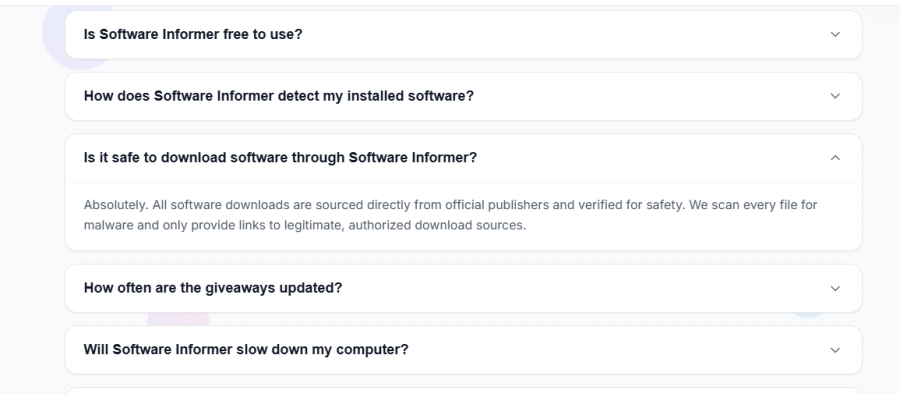
According to Software Informer, all downloads are sourced from official publishers, verified for safety, scanned for malware, and linked to legitimate and authorized download sources.
On paper, that is exactly what users expect from a reputable download site.
Is Software.informer.com Safe to Download Software From?
Safety is the biggest concern for most users, and rightly so. Software.informer.com states that it scans every file and only provides clean download links. However, no platform is completely risk-free.
One Trustpilot reviewer shared a concerning experience, claiming they downloaded Notebook Fan Control from Software Informer instead of the developer’s GitHub page and ended up with a Trojan virus. The reviewer questioned the site’s “no malware guaranteed” claim.
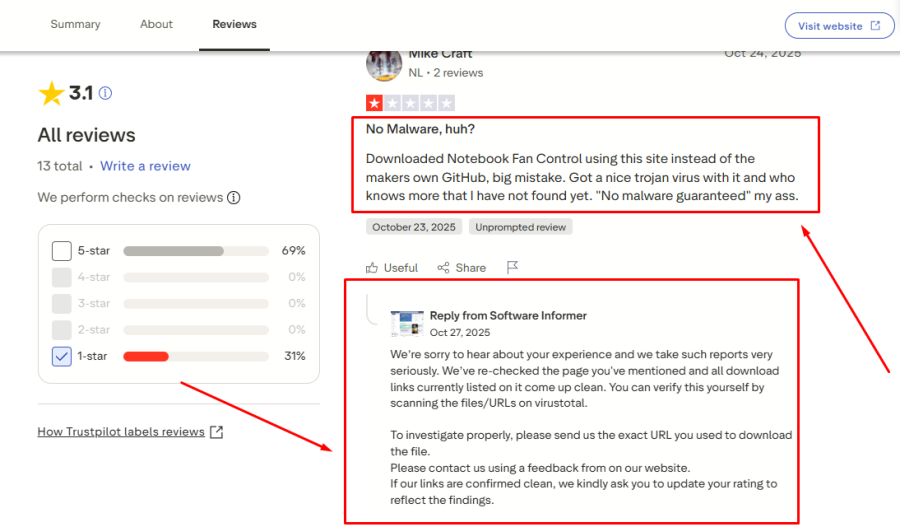
Software Informer responded publicly, saying they take such reports seriously. They re-checked the reported page and stated that all current download links tested clean. They also encouraged users to scan files themselves using services like VirusTotal.
This exchange suggests that while issues can happen, they are not ignored. It also highlights an important point: even legitimate platforms depend on users staying cautious.
Customer Reviews Are Mostly Positive, But Not Perfect
Looking at Trustpilot reviews overall, Software.informer.com receives largely positive feedback. Many users specifically praise the customer support, which is not something typically seen with scam websites.
One reviewer noted that after contacting support to update a vendor address, the issue was resolved quickly and professionally.
That said, not everyone is satisfied. Some users report negative experiences, mostly related to downloads or security concerns. This doesn’t automatically mean the site is unsafe, but it does reinforce the need for careful downloading habits.
How to Check if Software is Legit
Before downloading any software, it’s worth asking a few simple questions. Is the app developed by a reputable company, and how long has it been around? Is it widely used and reviewed by real users? Is the software also available on the developer’s official website? Is it open source, and if so, who compiles the final version?
If the answers are unclear or difficult to find, that’s usually a red flag.
How to Check if a Download Site is Safe
Even well-known download platforms can occasionally host risky files. To stay safe, it’s best to download only from reputable websites, double-check the URL, avoid installers that push extra software, and always scan files before opening them.
Using a trusted website checker is also smart. The ScamAdviser app is a useful tool for quickly checking whether a site is trustworthy before downloading anything.
Bottom Line: Is Software.informer.com Safe?
Overall, there is nothing to suggest that Software.informer.com is unsafe or a scam.
Key takeaways:
- Software.informer.com is an established platform with millions of users
- The site claims to source downloads from official publishers
- Customer reviews are mostly positive, especially about support
- There are isolated complaints about malware
- Downloading directly from the developer’s official website remains the safest option
Software.informer.com appears legitimate, but like any third-party download site, it should be used with caution.
FAQs
Is Software.informer.com a scam?
No. There is no clear evidence that Software.informer.com is a scam. It is a legitimate platform with real users and active support.
Can you get malware from Software Informer?
While rare, it is possible. Always scan downloads and avoid unnecessary installers.
Is it safer to download from the official website?
Yes. The official developer website is usually the safest source.
How can I check if a download site is trustworthy?
Use tools like the ScamAdviser app to quickly assess website risk before downloading.
This article has been written by a scam fighter volunteer. If you believe the article above contains inaccuracies or needs to include relevant information, please contact ScamAdviser.com using this form.

Report a Scam!

Have you fallen for a hoax, bought a fake product? Report the site and warn others!
Scam Categories
Help & Info
Top Safety Picks
Your Go-To Tools for Online SafetyDisclaimer: Some of the links here are affiliate links. If you click them and make a purchase, we may earn a commission at no extra cost to you.
- ScamAdviser App - iOS : Your personal scam detector, on the go! Check website safety, report scams, and get instant alerts. Available on iOS
- ScamAdviser App - Android : Your personal scam detector, on the go! Check website safety, report scams, and get instant alerts. Available on Android.
- NordVPN : NordVPN keeps your connection private and secure whether you are at home, traveling, or streaming from another country. It protects your data, blocks unwanted ads and trackers, and helps you access your paid subscriptions anywhere. Try it Today!
- Incogni : Incogni automatically removes your personal data from data brokers that trade in personal information online, helping reduce scam and identity theft risks without the hassle of manual opt-outs. Reclaim your privacy now!
Popular Stories
In a nutshell: A good VPN protects your privacy with strong encryption, a strict no-logs policy, and fast protocols like WireGuard. The best VPNs also offer wide server coverage, leak protection, and easy-to-use apps for all devices. For 2025, the top providers are NordVPN, ExpressVPN, Surfshark, Proton VPN, Private Internet Access, CyberGhost, and Mullvad—each excelling in speed, security, or value. In an age where every click is tracked, a Virtual Private Network (VPN) is no longer just a luxury—it's an essential tool for digital privacy and security. A VPN works by creating a secure, encrypted tunnel between your device and the internet, masking your real IP address and protecting your sensitive data from prying eyes. But with hundreds of providers out there, how do you sort the secure from the suspect? This guide breaks down the non-negotiable features of a quality VPN and highlights the 7 top-rated services for 2025. What to Look for in a Good VPN: The 4 Non-Negotiable Pillars 1. Ironclad Security Features Strong Encryption: AES-256, the gold standard. Secure Protocols: OpenVPN, WireGuard, NordLynx, Lightway. Avoid PPTP. Kill Switch: Ensures no accidental IP leaks. Leak Protection: Covers DNS, IPv6, and WebRTC. 2. Verified Privacy Practices No-Logs Policy: No activity or metadata tracking. Independent Audits: Verification by third parties. Safe Jurisdiction: Prefer countries outside the 5/9/14 Eyes alliances. 3. High-Speed Performance Fast Protocols: WireGuard and equivalents. Large Server Network: Less crowding, more reliable speeds. 4. Essential Usability Features Multi-Device Apps: Windows, Mac, iOS, Android, routers. Simultaneous Connections: One account, many devices. Unblocking Power: Netflix, Hulu, BBC
How to Protect Yourself and Your Family After a Data Breach When Your Data Falls Into the Wrong Hands Just received that terrifying notification? Or perhaps you've noticed suspicious activity in your accounts? Take a deep breath. A data breach, the unauthorized access or exposure of sensitive, protected, or confidential data, is a deeply unsettling event. It can plunge you into a world of worry, bringing risks from financial losses and identity theft to significant emotional distress and reputational damage. The numbers don't lie: according to a 2024 report, the number of data breach victim notices has grown by a staggering 211% year-over-year. This isn't just a distant threat; it's a stark reality many individuals face. This year alone, we've seen major organizations like Adidas and Qantas grapple with high-profile data breaches, affecting countless customers. This underscores a critical truth: nobody is untouchable. Subsequently, strategic action is the only way to minimize the risk and protect your future. This guide is your emergency action plan, designed to walk you through every crucial step—from confirming the breach to fortifying your digital life for the long term. Part 1: Confirming the Breach and Understanding the Damage The very first step is to answer the question definitively: Was my data compromised, and if so, how badly? Start with the basics: Check Official NotificationsReputable companies are legally obligated to inform you if your data was part of a breach. Look for official emails, letters, or public announcements. Check Verified Breach DatabasesPlatforms like HaveIBeenPwned help you see if