
Scam Website Checker: How to Spot Fake Sites Before They Steal Your Money
Author: Adam Collins
In a Nutshell
- Scrutinize the URL: AI can clone a website's look, but it can't steal a registered domain.
- Watch for "Pop-up" Sites: If a domain was registered in the last 30–90 days, treat it with extreme caution.
- Use ScamAdviser as a Second Opinion: Use its technical Trust Score to catch red flags the human eye misses.
- Report Suspicious Finds: Flagging a site on Scam.org helps protect others in real-time.
A scam website checker is a digital security tool that analyzes a website’s hidden technical signals—such as domain age, server location, SSL metadata, and global blacklist status—to determine if a site is safe. ScamAdviser uses a proprietary algorithm to evaluate these factors, providing a Trust Score from 1 (high risk) to 100 (highly likely to be legitimate).
Why You Need a Scam Website Checker
In this era, the "perfect" scam is no longer a myth. With AI-generated imagery and professional language models, fraudulent websites now look identical to major brands like Nike, Amazon, or UPS. According to the FBI’s latest IC3 data, reported losses to online fraud have climbed to over $16.6 billion annually, yet global estimates from the Global Anti-Scam Alliance (GASA), which ScamAdviser is a founding member, suggest the total impact is closer to $1 trillion when including unreported crimes.
When you are one click away from a "90% off" deal or a "failed delivery" notification, a scam website checker is your only objective line of defense.
How to Use ScamAdviser: A Step-by-Step Guide
Verifying a site takes less than five seconds and can save you months of identity theft recovery.
- Copy the URL: Highlight the address in your browser bar (e.g., www.suspicious-deal.com).
- Paste into the Checker: Enter the link into the ScamAdviser search bar.
- Analyze the Trust Score: A high score (80-100) indicates a well-established site; a low score (under 40) is a high-risk warning.
- Review the Red Flags: Look at the "Highlights" section to see if the domain is brand new or if the server is hidden in a high-risk jurisdiction.
Read more on how ScamAdviser’s Algorithm works.
3 Red Flags the Human Eye Often Misses
While the site might look professional, the data tells a different story. Here is what ScamAdviser looks for behind the scenes:
1. The "Birth Certificate" (Domain Age)
Legitimate retailers invest in their domains for years. Scammers use a "burn and churn" strategy, registering sites, stealing data for three weeks, and vanishing. If a "Big Brand Sale" site was registered only 14 days ago, it is a guaranteed trap.
2. The Padlock Deception
Do not rely on the padlock icon in your browser. While it means your connection is encrypted, over 80% of phishing sites now use these certificates to look "secure." Encryption only proves your data is sent privately—it doesn't prove the person receiving it isn't a criminal.
3. Hidden Server Locations
A site claiming to be a "Boutique in London" should not be hosted on a server known for hosting malware in a completely different country. ScamAdviser identifies these geographical mismatches instantly.
Scam Website Checker vs. Google Safe Browsing: What’s the Difference?
While tools like Google Safe Browsing are excellent for blocking known malware, they often miss "Zero-Day" scams—new sites that haven't been reported yet. ScamAdviser goes deeper by analyzing the likelihood of a scam based on technical infrastructure and ownership data, catching fraudulent sites before they end up on a global blacklist.
Frequently Asked Questions
How do I check if a website is safe to buy from?
Paste the URL into a reputable scam website checker like ScamAdviser to view its Trust Score and domain age before entering any payment details.
Is [Website Name] a scam?
You can verify any specific site by searching for it on ScamAdviser.com, which cross-references the URL against millions of reported fraudulent domains.
What does a Trust Score of 60 mean on ScamAdviser?
A score of 60 indicates a "medium risk" site; it may be a new business that hasn't established a reputation yet, or it may have some technical configurations commonly seen in risky sites.
Does a padlock icon mean the store is legitimate?
No, the padlock only confirms the connection is encrypted; scammers frequently use free SSL certificates to trick users into a false sense of security.
What should I do if I already gave my card details to a scam site?
Contact your bank immediately to freeze your card and report the fraudulent URL to Scam.org to help protect other shoppers.
How can I tell the difference between a real URL and a "typosquatting" link?
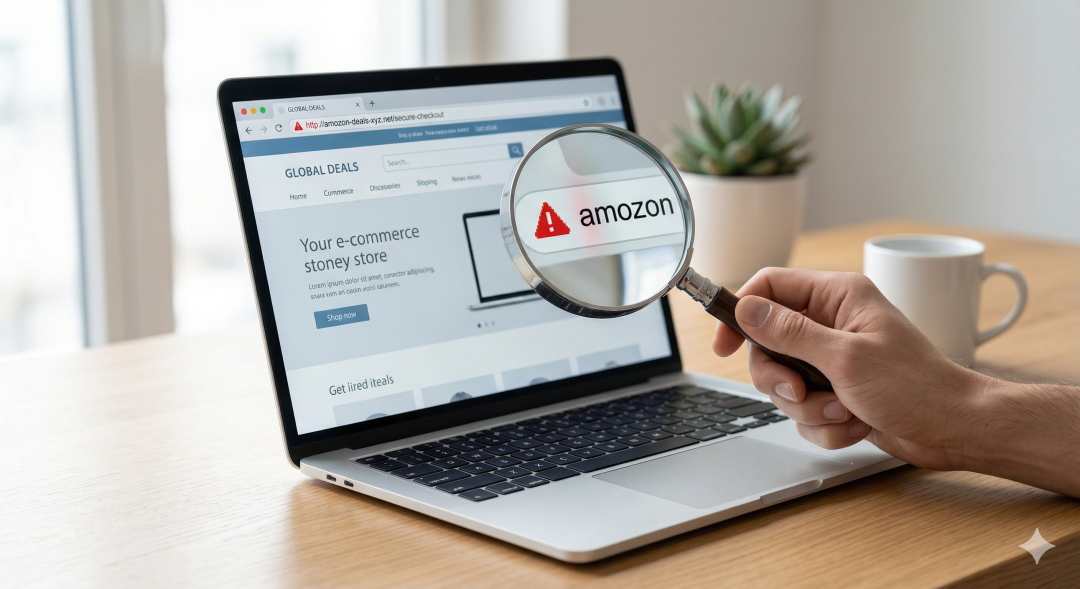
Look for minor character swaps, such as amaz0n.com (using a zero) or wellsfargo-secure.net instead of the official .com domain.
Why is the domain age of a website so important?
Most scam sites are "fly-by-night" operations that are less than six months old; a long-standing domain is a primary indicator of a legitimate business.
Can a scam website checker detect "cloaking"?
Yes, advanced checkers like ScamAdviser can often see through cloaking, a technique where scammers show "safe" content to search engines but "scam" content to actual visitors.
Adam Collins is a cybersecurity researcher at ScamAdviser who operates under a pseudonym for privacy and security. With over four years on the digital frontlines and 1,500+ days spent deconstructing thousands of fraud schemes, he specializes in translating complex threats into actionable advice. Adam’s mission is simple: exposing red flags so you can navigate the web with confidence.
Report a Scam!

Have you fallen for a hoax, bought a fake product? Report the site and warn others!
Scam Categories
Help & Info
Top Safety Picks
Your Go-To Tools for Online SafetyDisclaimer: Some of the links here are affiliate links. If you click them and make a purchase, we may earn a commission at no extra cost to you.
- ScamAdviser App - iOS : Your personal scam detector, on the go! Check website safety, report scams, and get instant alerts. Available on iOS
- ScamAdviser App - Android : Your personal scam detector, on the go! Check website safety, report scams, and get instant alerts. Available on Android.
- NordVPN : NordVPN keeps your connection private and secure whether you are at home, traveling, or streaming from another country. It protects your data, blocks unwanted ads and trackers, and helps you access your paid subscriptions anywhere. Try it Today!
- Incogni : Incogni automatically removes your personal data from data brokers that trade in personal information online, helping reduce scam and identity theft risks without the hassle of manual opt-outs. Reclaim your privacy now!
Popular Stories
In a nutshell: A good VPN protects your privacy with strong encryption, a strict no-logs policy, and fast protocols like WireGuard. The best VPNs also offer wide server coverage, leak protection, and easy-to-use apps for all devices. For 2025, the top providers are NordVPN, ExpressVPN, Surfshark, Proton VPN, Private Internet Access, CyberGhost, and Mullvad—each excelling in speed, security, or value. In an age where every click is tracked, a Virtual Private Network (VPN) is no longer just a luxury—it's an essential tool for digital privacy and security. A VPN works by creating a secure, encrypted tunnel between your device and the internet, masking your real IP address and protecting your sensitive data from prying eyes. But with hundreds of providers out there, how do you sort the secure from the suspect? This guide breaks down the non-negotiable features of a quality VPN and highlights the 7 top-rated services for 2025. What to Look for in a Good VPN: The 4 Non-Negotiable Pillars 1. Ironclad Security Features Strong Encryption: AES-256, the gold standard. Secure Protocols: OpenVPN, WireGuard, NordLynx, Lightway. Avoid PPTP. Kill Switch: Ensures no accidental IP leaks. Leak Protection: Covers DNS, IPv6, and WebRTC. 2. Verified Privacy Practices No-Logs Policy: No activity or metadata tracking. Independent Audits: Verification by third parties. Safe Jurisdiction: Prefer countries outside the 5/9/14 Eyes alliances. 3. High-Speed Performance Fast Protocols: WireGuard and equivalents. Large Server Network: Less crowding, more reliable speeds. 4. Essential Usability Features Multi-Device Apps: Windows, Mac, iOS, Android, routers. Simultaneous Connections: One account, many devices. Unblocking Power: Netflix, Hulu, BBC
How to Protect Yourself and Your Family After a Data Breach When Your Data Falls Into the Wrong Hands Just received that terrifying notification? Or perhaps you've noticed suspicious activity in your accounts? Take a deep breath. A data breach, the unauthorized access or exposure of sensitive, protected, or confidential data, is a deeply unsettling event. It can plunge you into a world of worry, bringing risks from financial losses and identity theft to significant emotional distress and reputational damage. The numbers don't lie: according to a 2024 report, the number of data breach victim notices has grown by a staggering 211% year-over-year. This isn't just a distant threat; it's a stark reality many individuals face. This year alone, we've seen major organizations like Adidas and Qantas grapple with high-profile data breaches, affecting countless customers. This underscores a critical truth: nobody is untouchable. Subsequently, strategic action is the only way to minimize the risk and protect your future. This guide is your emergency action plan, designed to walk you through every crucial step—from confirming the breach to fortifying your digital life for the long term. Part 1: Confirming the Breach and Understanding the Damage The very first step is to answer the question definitively: Was my data compromised, and if so, how badly? Start with the basics: Check Official NotificationsReputable companies are legally obligated to inform you if your data was part of a breach. Look for official emails, letters, or public announcements. Check Verified Breach DatabasesPlatforms like HaveIBeenPwned help you see if