
The Ultimate Black Friday and Holiday Shopping Security Guide
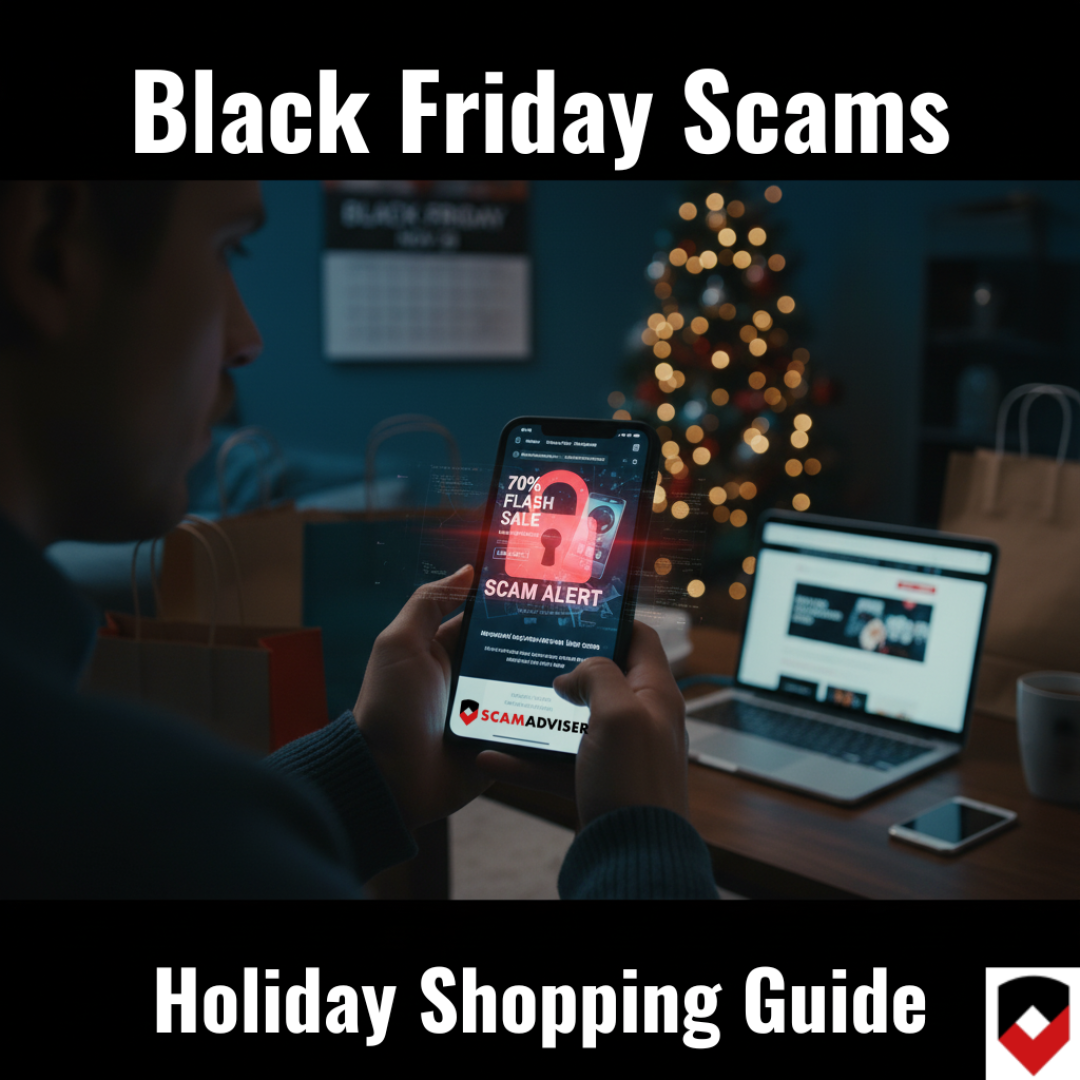
Author: Adam Collins
Outsmarting Scams Every Season
In a nutshell:
- Holiday shopping attracts a surge of advanced scams.
- Scammers exploit urgency, excitement, and new tech like AI and voice cloning.
- Fake sites, phishing, counterfeit goods, and P2P payment traps dominate.
- Protect yourself with 2FA, secure networks, and strict verification.
- When in doubt, slow down and double-check before clicking or paying.
Black Friday and the wider holiday shopping season represent the perfect mix of excitement and risk. Massive discounts, sold-out products suddenly “back in stock,” last-minute gift pressure—scammers know exactly how to weaponize all of it. Each year, they refine their methods, tapping into new technologies, social engineering tricks, and the psychology of rushed shoppers.
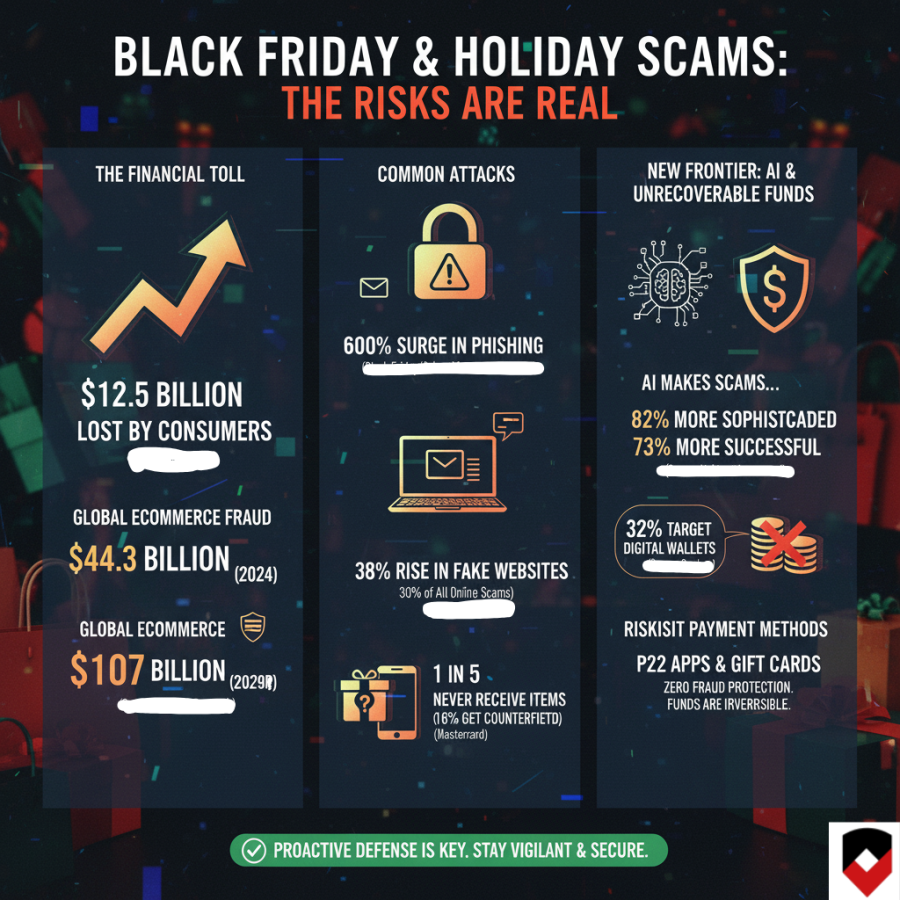
The stakes are rising fast. Global eCommerce fraud losses reached an estimated $44.3 billion in 2024 and are expected to surge to $107 billion by 2029 — a staggering 141 percent jump in just five years (Juniper Research). Consumers feel this impact directly. According to the Federal Trade Commission, fraud losses reported by individuals climbed past $12.5 billion in 2024, up 25 percent from the previous year.
These are not just numbers. Behind every statistic is someone who lost money, had their identity compromised, or spent months trying to recover. It does not have to be this way. Protecting yourself during the holiday season is not only about avoiding a bad purchase. It is about safeguarding your finances, your personal information, and your peace of mind.
This guide equips you with the same core principles cybersecurity professionals use daily: vigilance, skepticism, and strategic decision-making.
Key Takeaway: Scammers evolve rapidly. Your ability to question what you see, verify before you act, and stay skeptical remains your most reliable defense.
Part 1: The Ever-Evolving Scam Landscape – What Should You Watch Out For?
1. Are Phishing and Smishing Attempts Getting Harder to Spot?
Phishing emails and smishing texts remain the backbone of holiday fraud. Scammers impersonate Amazon, Walmart, UPS, FedEx, your bank, or even your credit card provider.
The lure: urgent delivery notices, fake order confirmations, “suspicious activity” alerts.
The goal: push you into clicking a malicious link or entering your credentials on a fake login page.
Pro Tip: Never trust links in unsolicited messages. Go directly to the official site or app and check your account from there.
2. Are You Sure That Shopping Website is Real?
Scammers create polished fake storefronts that look indistinguishable from real brands. These sites are often pushed through paid ads or viral social posts.
The lure: impossible discounts, rare items suddenly available, countdown timers.
The goal: steal your payment details, deliver counterfeits, or ship nothing at all.
Pro Tip:
- Verify the URL spelling.
- Confirm https and the padlock, but remember that scammers also use SSL.
- Search for real reviews and social presence.
- If the price feels unrealistic, trust your instinct.
3. Are Marketplace Deals Too Good to Be True?
Counterfeit sellers thrive on Facebook Marketplace, Instagram shops, Telegram groups, and eBay.
The lure: luxury goods or trending electronics at half the normal price.
The goal: unload cheap fakes or vanish after payment.
Pro Tip: Check seller ratings, ask for proof of authenticity, and avoid anyone insisting on wire transfers or gift cards.
4. Are Those Coupons and Giveaways Actually Legit?
Scammers exploit holiday hype with fake coupons, viral “giveaways,” and fraudulent promo codes.
The lure: free gift cards, 70 percent discounts, “you’ve won” messages.
The goal: grab your personal information or push you to malicious links.
Pro Tip: Confirm all offers directly on the retailer’s official website.
5. Is Someone Pushing You to Pay with Gift Cards?
Gift cards are the scammer’s dream currency because they are fast, untraceable, and irreversible.
The lure: demands for payment for taxes, bills, purchases, emergencies, or tech support.
The goal: drain the funds instantly so you have no recourse.
Pro Tip: No legitimate company, agency, or support service asks for gift card payments. Ever.
6. Are Those Phone Calls Actually From Your Bank?
Scammers use increasingly convincing vishing calls to create panic.
The lure: “fraud detected,” “your account is locked,” or urgent payment issues.
The goal: pressure you into revealing one-time codes, PINs, or passwords.
Pro Tip: Hang up immediately. Call the bank back using the number on your card or their website.
Part 2: The New Frontier of Fraud – How Is Technology Supercharging Scams?
7. Can You Still Trust What You See and Hear? AI Voice Cloning and Deepfake Scams
AI has dramatically raised the stakes.
The lure:
- Flawless phishing emails
- Deepfake ads featuring influencers
- Voice clones of family members in “emergencies”
The goal: override your natural skepticism with hyper-realistic deception.
Pro Tip: Verify any urgent or emotional request through a separate known channel, not the one used to contact you.
8. Are P2P Payments Setting You Up for Loss?
Zelle, Cash App, and Venmo are convenient, but once money leaves your account, it’s almost always gone for good.
The lure: sellers demanding P2P payments, fake overpayment refunds, or “urgent” transfers from compromised accounts.
The goal: trap you in irreversible transactions.
Pro Tip: Only use P2P apps for people you personally know. Never for online purchases.
9. Are Hidden Subscriptions Sneaking Into Your Cart?
Some deals hide long-term recurring fees in tiny print.
The lure: free trials or steep discounts with “automatic renewal.”
The goal: lock you into monthly charges you don’t notice until it’s too late.
Pro Tip: Scan all terms carefully and check your bank statements throughout the season.
Part 3: Your Black Friday Security Toolkit – How Do You Build a Strong Defense?
1. Have You Secured Your Online Shopping Environment?
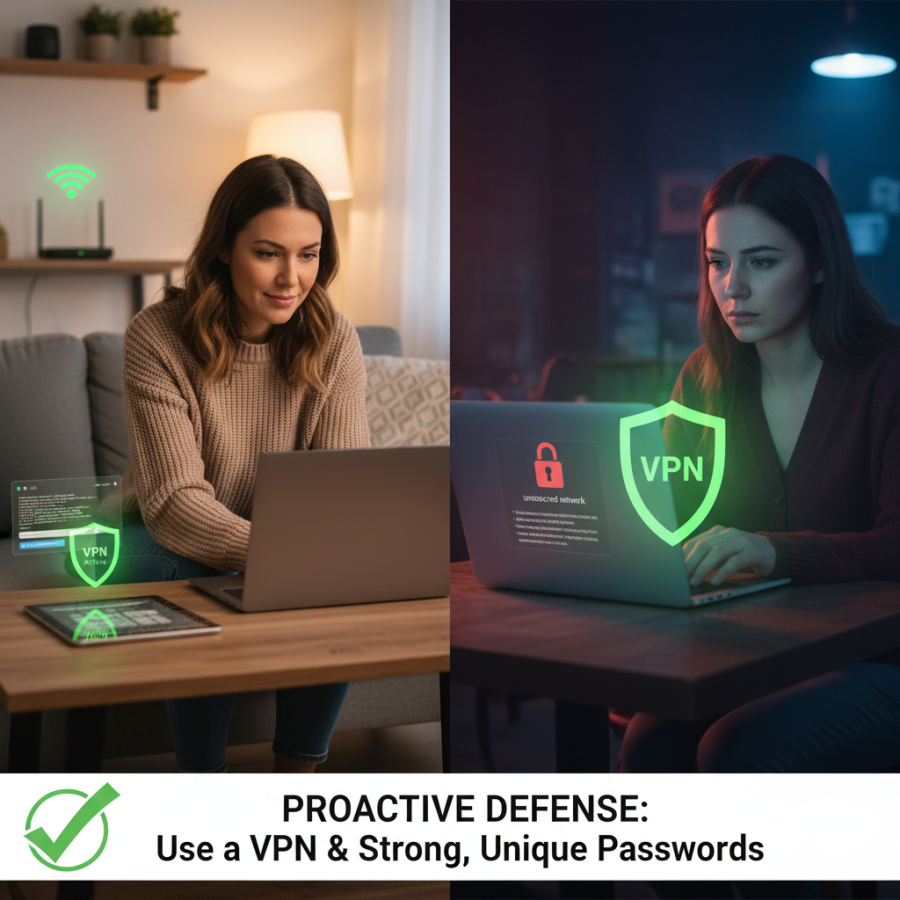
Strong, unique passwords for every account
Two-factor authentication on email, bank, and shopping apps
Shopping only on secure Wi-Fi or through a trusted VPN
These simple habits shut down a huge portion of attack attempts before they start.
FAQs
What is the fastest way to identify a scam?
If the price is dramatically below market value, assume risk.
Are social media ads safe to buy from?
Not by default. Scammers pay for ads too. Always verify the seller.
Should I ever send gift cards or P2P payments to sellers?
No. These methods offer zero protection.
How do I check if a website is legitimate?
Inspect the URL, confirm real reviews, and use a reputable website checker.
What should I do if I realize I was scammed?
Contact your bank immediately, secure your accounts, and report the fraudulent site or seller.
Ready to Shop Smarter This Season?
Holiday scams move fast, and scammers count on you rushing. The ScamAdviser app helps you slow down, verify, and avoid dangerous traps before they hit.
With the app, you can:
- Check if any website is safe within seconds
- Detect risky stores and fake offers instantly
- Track trending scams in real time
- Verify sellers while browsing social media or online marketplaces
In a season full of urgency, countdown timers, and tempting offers, having ScamAdviser in your pocket gives you a serious advantage. Download the app before you start shopping and protect yourself with confidence.

Disclaimer: Some of the links in this post are affiliate links. If you click them and make a purchase, we may earn a commission at no extra cost to you.
Report a Scam!

Have you fallen for a hoax, bought a fake product? Report the site and warn others!
Scam Categories
Help & Info
Top Safety Picks
Your Go-To Tools for Online SafetyDisclaimer: Some of the links here are affiliate links. If you click them and make a purchase, we may earn a commission at no extra cost to you.
- ScamAdviser App - iOS : Your personal scam detector, on the go! Check website safety, report scams, and get instant alerts. Available on iOS
- ScamAdviser App - Android : Your personal scam detector, on the go! Check website safety, report scams, and get instant alerts. Available on Android.
- NordVPN : NordVPN keeps your connection private and secure whether you are at home, traveling, or streaming from another country. It protects your data, blocks unwanted ads and trackers, and helps you access your paid subscriptions anywhere. Try it Today!
- Incogni : Incogni automatically removes your personal data from data brokers that trade in personal information online, helping reduce scam and identity theft risks without the hassle of manual opt-outs. Reclaim your privacy now!
Popular Stories
In a nutshell: A good VPN protects your privacy with strong encryption, a strict no-logs policy, and fast protocols like WireGuard. The best VPNs also offer wide server coverage, leak protection, and easy-to-use apps for all devices. For 2025, the top providers are NordVPN, ExpressVPN, Surfshark, Proton VPN, Private Internet Access, CyberGhost, and Mullvad—each excelling in speed, security, or value. In an age where every click is tracked, a Virtual Private Network (VPN) is no longer just a luxury—it's an essential tool for digital privacy and security. A VPN works by creating a secure, encrypted tunnel between your device and the internet, masking your real IP address and protecting your sensitive data from prying eyes. But with hundreds of providers out there, how do you sort the secure from the suspect? This guide breaks down the non-negotiable features of a quality VPN and highlights the 7 top-rated services for 2025. What to Look for in a Good VPN: The 4 Non-Negotiable Pillars 1. Ironclad Security Features Strong Encryption: AES-256, the gold standard. Secure Protocols: OpenVPN, WireGuard, NordLynx, Lightway. Avoid PPTP. Kill Switch: Ensures no accidental IP leaks. Leak Protection: Covers DNS, IPv6, and WebRTC. 2. Verified Privacy Practices No-Logs Policy: No activity or metadata tracking. Independent Audits: Verification by third parties. Safe Jurisdiction: Prefer countries outside the 5/9/14 Eyes alliances. 3. High-Speed Performance Fast Protocols: WireGuard and equivalents. Large Server Network: Less crowding, more reliable speeds. 4. Essential Usability Features Multi-Device Apps: Windows, Mac, iOS, Android, routers. Simultaneous Connections: One account, many devices. Unblocking Power: Netflix, Hulu, BBC
How to Protect Yourself and Your Family After a Data Breach When Your Data Falls Into the Wrong Hands Just received that terrifying notification? Or perhaps you've noticed suspicious activity in your accounts? Take a deep breath. A data breach, the unauthorized access or exposure of sensitive, protected, or confidential data, is a deeply unsettling event. It can plunge you into a world of worry, bringing risks from financial losses and identity theft to significant emotional distress and reputational damage. The numbers don't lie: according to a 2024 report, the number of data breach victim notices has grown by a staggering 211% year-over-year. This isn't just a distant threat; it's a stark reality many individuals face. This year alone, we've seen major organizations like Adidas and Qantas grapple with high-profile data breaches, affecting countless customers. This underscores a critical truth: nobody is untouchable. Subsequently, strategic action is the only way to minimize the risk and protect your future. This guide is your emergency action plan, designed to walk you through every crucial step—from confirming the breach to fortifying your digital life for the long term. Part 1: Confirming the Breach and Understanding the Damage The very first step is to answer the question definitively: Was my data compromised, and if so, how badly? Start with the basics: Check Official NotificationsReputable companies are legally obligated to inform you if your data was part of a breach. Look for official emails, letters, or public announcements. Check Verified Breach DatabasesPlatforms like HaveIBeenPwned help you see if