
Coronatic.com Review: Is Coronatic.com Safe or a Scam?
Author: Adam Collins
In a Nutshell
- Domain registered on 2025-11-24, making it very new
- Identical “About Us” text found on other suspicious sites like Reprlant.com
- Uses a Hong Kong company name linked to multiple low-trust websites
- No clear or reliable return address
- Customers must pay for return shipping themselves
- Overall transparency and trust signals are weak
Coronatic.com is the kind of site that tries to win you over quickly—clean design, trendy fashion pieces, and prices that feel just right. But once you look a little closer, the cracks start to show. And unfortunately, they’re not small ones.
Let’s walk through what’s really going on here.
First Impressions vs Reality
At face value, Coronatic.com presents itself as a global online fashion store offering everything from dresses and tops to jewelry and even handmade toys. It sounds broad, but still believable.
Then you read their “About Us” section.
It claims the site “is your global online store that delivers latest fashion apparel for you! We have handmade toys, dresses, tops, bottoms and jewelry for girls and ladies.” The issue? That exact sentence appears on other websites, including Reprlant.com.
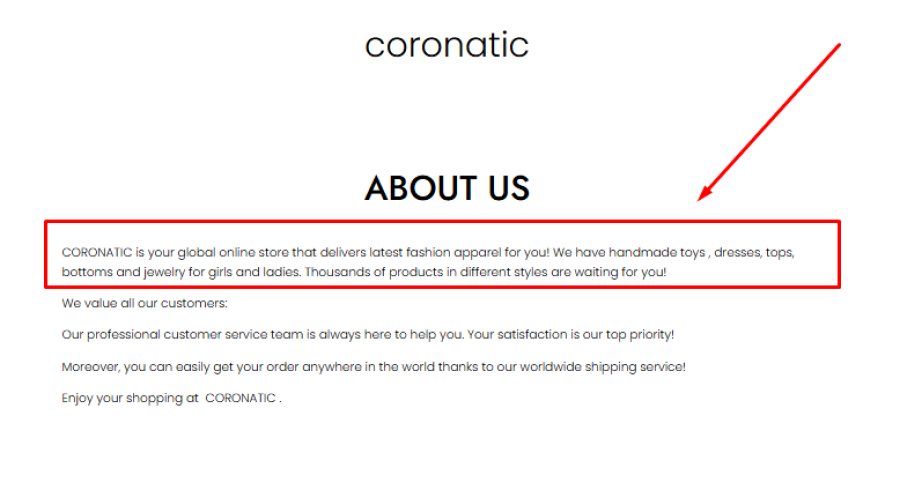
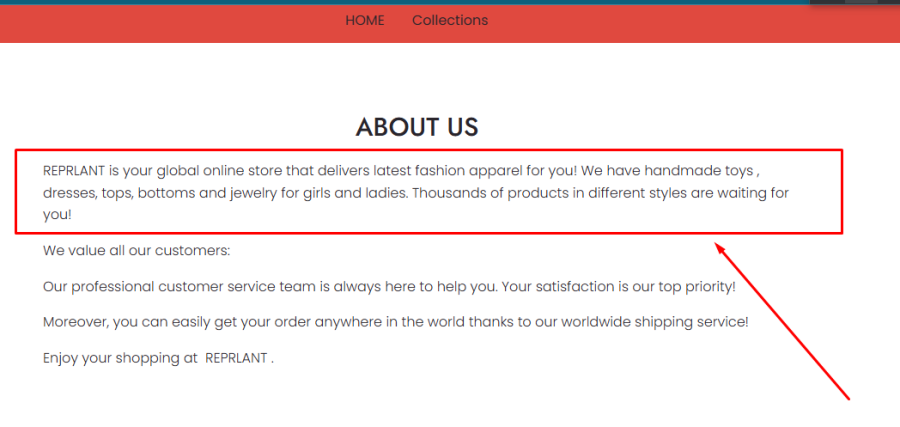
This isn’t inspiration or coincidence. It’s copy-paste.
And when a store can’t even write its own description, it raises a bigger question: what else isn’t original?
A Fresh Domain With No Track Record
The domain registration date—November 24, 2025 according to ScamAdviser—puts Coronatic.com firmly in the “too new to trust” category.
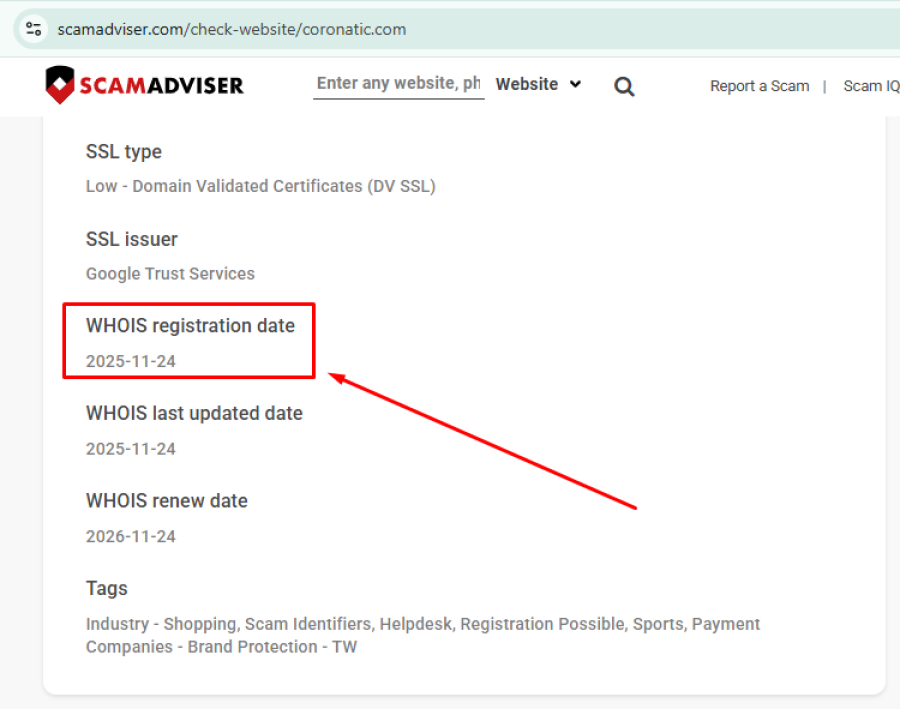
New websites aren’t always bad, but scam sites rely on this exact advantage. They pop up, run for a short time, collect orders, and sometimes disappear before complaints catch up.
Without a history, reviews, or a proven track record, you’re essentially shopping blind.
The Company Behind the Curtain
Coronatic.com lists its company as:
HONG KONG STAR TRACE TRADING CO., LIMITED
Registration Number: 76071936
Address: RM 509, 5/F THE CLOUD 111 TUNG CHAU STREET TAI KOK TSUI HONGKONG
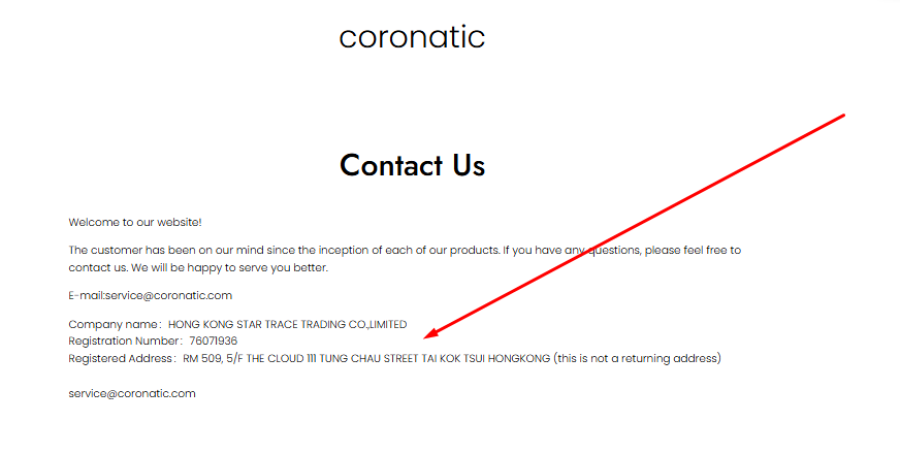
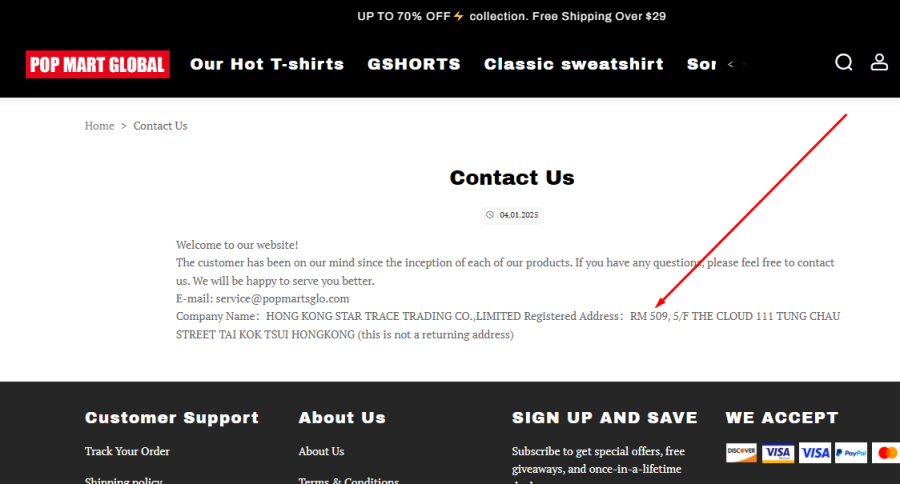
On paper, it looks legitimate. But here’s where things get uncomfortable.
This exact company information shows up across numerous other questionable online stores. It’s not unique to Coronatic.com, which makes it less of a trust signal and more of a recycled identity.
Even more concerning, the address provided is not confirmed as a return address. So while it gives the impression of legitimacy, it doesn’t necessarily help you if something goes wrong.
The Return Policy Trap
Coronatic.com clearly states that customers are responsible for paying their own return shipping costs.
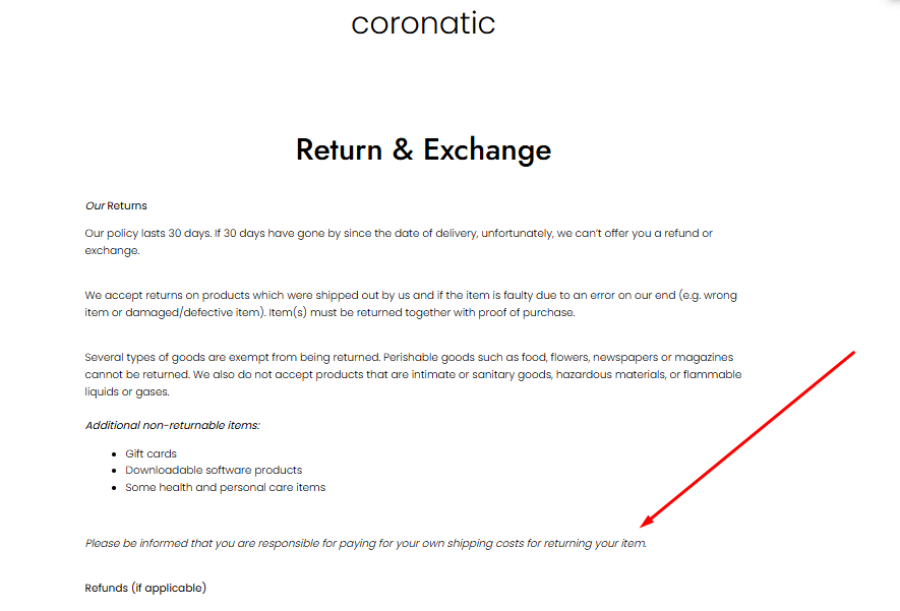
That might sound standard, but in cases like this, it can become a deal-breaker. If the product arrives damaged, looks nothing like the photos, or doesn’t arrive at all, returning it could cost more than the item itself—especially if shipping internationally.
In some cases, buyers report being unable to complete returns altogether due to unclear instructions or lack of response from the seller.
A Pattern That’s Hard to Ignore
When you put everything together—the copied content, the shared company details, and the new domain—it starts to look less like a standalone business and more like part of a larger network of similar scam websites.
These types of sites often follow a predictable pattern. They reuse templates, duplicate product listings, and operate under different domain names while presenting the same underlying structure.
Coronatic.com fits that pattern a little too neatly.
Bottom Line: “Too Many Red Flags to Ignore”
- Coronatic.com shows multiple signs of being high-risk
- Copied content and shared company details reduce credibility
- New domain means no proven trust history
- Return policies could make refunds difficult or costly
- Best approached with caution
FAQs
Is Coronatic.com a legit website?
It doesn’t show strong signs of legitimacy. Several red flags suggest it may not be reliable.
Why does copied content matter?
Because it often indicates the site is part of a mass-produced network rather than a genuine business.
Is it safe to buy from Coronatic.com?
It carries risk. If you choose to proceed, use secure payment methods and avoid spending large amounts.
Can I return items easily?
Not necessarily. You may have to pay for return shipping, and the process may not be straightforward.
What should I do if I already ordered?
Monitor your transaction, keep all records, and contact your payment provider if something feels off.
This article has been written by a scam fighter volunteer. If you believe the article above contains inaccuracies or needs to include relevant information, please contact ScamAdviser.com using this form.
Adam Collins is a cybersecurity researcher at ScamAdviser who operates under a pseudonym for privacy and security. With over four years on the digital frontlines and 1,500+ days spent deconstructing thousands of fraud schemes, he specialises in translating complex threats into actionable advice. His mission: exposing red flags so you can navigate the web with confidence.
Report a Scam!

Have you fallen for a hoax, bought a fake product? Report the site and warn others!
Scam Categories
Help & Info
Top Safety Picks
Your Go-To Tools for Online SafetyDisclaimer: Some of the links here are affiliate links. If you click them and make a purchase, we may earn a commission at no extra cost to you.
- ScamAdviser App - iOS : Your personal scam detector, on the go! Check website safety, report scams, and get instant alerts. Available on iOS
- ScamAdviser App - Android : Your personal scam detector, on the go! Check website safety, report scams, and get instant alerts. Available on Android.
- NordVPN : NordVPN keeps your connection private and secure whether you are at home, traveling, or streaming from another country. It protects your data, blocks unwanted ads and trackers, and helps you access your paid subscriptions anywhere. Try it Today!
- Incogni : Incogni automatically removes your personal data from data brokers that trade in personal information online, helping reduce scam and identity theft risks without the hassle of manual opt-outs. Reclaim your privacy now!
Popular Stories
In a nutshell: A good VPN protects your privacy with strong encryption, a strict no-logs policy, and fast protocols like WireGuard. The best VPNs also offer wide server coverage, leak protection, and easy-to-use apps for all devices. For 2025, the top providers are NordVPN, ExpressVPN, Surfshark, Proton VPN, Private Internet Access, CyberGhost, and Mullvad—each excelling in speed, security, or value. In an age where every click is tracked, a Virtual Private Network (VPN) is no longer just a luxury—it's an essential tool for digital privacy and security. A VPN works by creating a secure, encrypted tunnel between your device and the internet, masking your real IP address and protecting your sensitive data from prying eyes. But with hundreds of providers out there, how do you sort the secure from the suspect? This guide breaks down the non-negotiable features of a quality VPN and highlights the 7 top-rated services for 2025. What to Look for in a Good VPN: The 4 Non-Negotiable Pillars 1. Ironclad Security Features Strong Encryption: AES-256, the gold standard. Secure Protocols: OpenVPN, WireGuard, NordLynx, Lightway. Avoid PPTP. Kill Switch: Ensures no accidental IP leaks. Leak Protection: Covers DNS, IPv6, and WebRTC. 2. Verified Privacy Practices No-Logs Policy: No activity or metadata tracking. Independent Audits: Verification by third parties. Safe Jurisdiction: Prefer countries outside the 5/9/14 Eyes alliances. 3. High-Speed Performance Fast Protocols: WireGuard and equivalents. Large Server Network: Less crowding, more reliable speeds. 4. Essential Usability Features Multi-Device Apps: Windows, Mac, iOS, Android, routers. Simultaneous Connections: One account, many devices. Unblocking Power: Netflix, Hulu, BBC
How to Protect Yourself and Your Family After a Data Breach When Your Data Falls Into the Wrong Hands Just received that terrifying notification? Or perhaps you've noticed suspicious activity in your accounts? Take a deep breath. A data breach, the unauthorized access or exposure of sensitive, protected, or confidential data, is a deeply unsettling event. It can plunge you into a world of worry, bringing risks from financial losses and identity theft to significant emotional distress and reputational damage. The numbers don't lie: according to a 2024 report, the number of data breach victim notices has grown by a staggering 211% year-over-year. This isn't just a distant threat; it's a stark reality many individuals face. This year alone, we've seen major organizations like Adidas and Qantas grapple with high-profile data breaches, affecting countless customers. This underscores a critical truth: nobody is untouchable. Subsequently, strategic action is the only way to minimize the risk and protect your future. This guide is your emergency action plan, designed to walk you through every crucial step—from confirming the breach to fortifying your digital life for the long term. Part 1: Confirming the Breach and Understanding the Damage The very first step is to answer the question definitively: Was my data compromised, and if so, how badly? Start with the basics: Check Official NotificationsReputable companies are legally obligated to inform you if your data was part of a breach. Look for official emails, letters, or public announcements. Check Verified Breach DatabasesPlatforms like HaveIBeenPwned help you see if