
BioSteady Blood Optimizer Review – Overhyped Supplement?

Author: Adam Collins
In a Nutshell
- Website is brand new with no proven track record
- Misleading use of “FDA-approved facility” claims
- No verified evidence supporting triple-action health benefits
- Uses urgency tactics to push quick purchases
A supplement that claims to tackle blood sugar, blood pressure, and weight loss all at once sounds tempting—especially if it’s wrapped in big discounts and urgent “today only” offers. BioSteady Blood Optimizer does exactly that. But when you dig a little deeper, the story starts to fall apart.
The domain Biosteady.org was registered on April 3, 2026. That means the entire brand has existed for less than a week at the time of review. When a brand-new website makes bold promises about solving complex health issues, it’s worth slowing down and asking a few questions.
Can One Supplement Really Do It All?
BioSteady markets itself as a “triple action” formula designed to manage blood sugar, improve blood pressure, and support weight loss. That’s a big claim—and one that doesn’t align with how most treatments work.
While the formula includes common herbal ingredients, there is no solid clinical evidence showing that a single supplement can effectively manage all three of these conditions at once. At best, some ingredients may support general wellness in isolation, but combining them doesn’t automatically create a powerful, all-in-one solution.
When it comes to health, broad promises like this are often more marketing than science.
Is the Science Backed by Evidence?
Looking closer, the gap between the marketing and actual evidence becomes clear. The ingredients listed are not unusual, and some have been studied individually. However, there’s no reliable proof that this specific combination delivers the results being advertised.
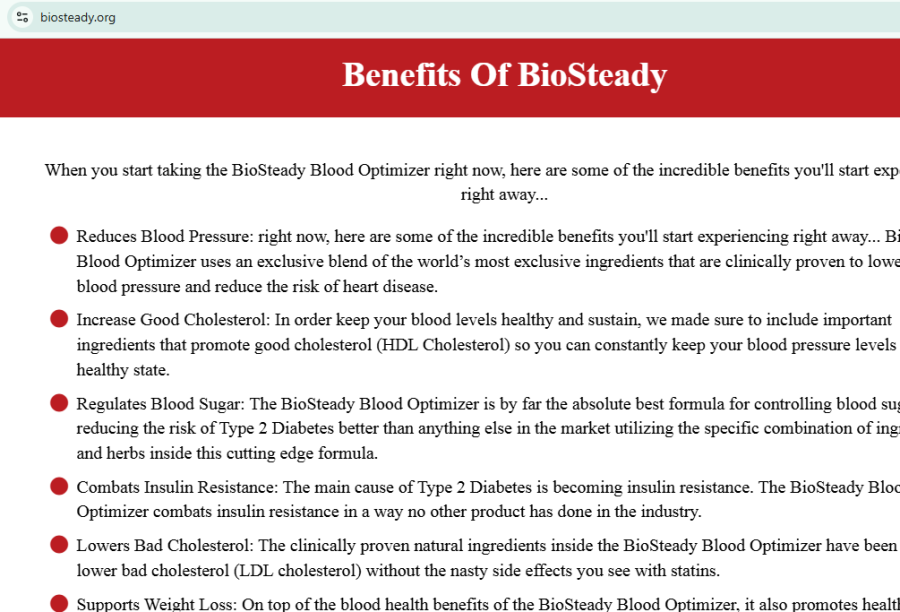
This is a common pattern with online supplements as we have seen in MemoryVitali Review, Audifort Review, & LipoLess Review. The product leans on the reputation of individual ingredients while skipping over the lack of testing on the final formula. Without clinical trials or independent verification, the claims remain unproven.
Are There Safety Red Flags?
There are several concerns you shouldn’t ignore. Testimonials on the website appear to be hosted internally, meaning they can’t be independently verified. There’s no way to confirm whether they reflect real customer experiences or not.
The mention of an “FDA-approved facility” is also misleading. The Food and Drug Administration does not approve supplement manufacturing facilities in the way this phrase suggests. Supplements are regulated as food, not drugs, which means they don’t go through the same approval process as medical treatments.
On top of that, the brand’s extremely recent launch means there’s no established reputation, no long-term customer feedback, and no independent reviews to rely on.
Are Customers Being Pressured to Buy?
The website leans heavily on urgency. Phrases like “Flat Sale ONLY For Today” or “Save Up to $960” are designed to push you into making a quick decision.
These tactics are common in questionable online products. They create pressure, making you feel like you’ll miss out if you don’t act immediately. In reality, these “limited-time” offers often reset or repeat, and the high original price is rarely justified.
When a product relies more on countdowns and discounts than on transparent information, it’s a sign to pause rather than proceed.
What About Billing and Refunds?
There are also concerns around subscription models and billing practices. Some reports suggest that canceling orders or subscriptions may not be straightforward. With such a new company, there’s no track record to confirm whether refund promises are actually honored.
This means you’re not just taking a chance on the product—you’re also trusting your payment details to a business with no proven history.
Bottom Line: Is Biosteady.org Safe Legit?
Overall, Biosteady.org comes off as risky.
- Brand-new website with no credibility or track record
- Health claims are broad and not backed by clinical evidence
- Misleading regulatory language used to build trust
- Heavy reliance on urgency and discount tactics
- Potential risks around billing and customer support
BioSteady Blood Optimizer raises more questions than it answers. While the idea of a simple, all-in-one health solution is appealing, the lack of evidence, transparency, and credibility makes it difficult to trust. When it comes to managing serious conditions like blood pressure or blood sugar, it’s always safer to rely on qualified medical advice rather than bold claims from a newly launched website.
This article has been written by a scam fighter volunteer. If you believe the article above contains inaccuracies or needs to include relevant information, please contact ScamAdviser.com using this form.
Adam Collins is a cybersecurity researcher at ScamAdviser who operates under a pseudonym for privacy and security. With over four years on the digital frontlines and 1,500+ days spent deconstructing thousands of fraud schemes, he specialises in translating complex threats into actionable advice. His mission: exposing red flags so you can navigate the web with confidence.
Report a Scam!

Have you fallen for a hoax, bought a fake product? Report the site and warn others!
Scam Categories
Help & Info
Top Safety Picks
Your Go-To Tools for Online SafetyDisclaimer: Some of the links here are affiliate links. If you click them and make a purchase, we may earn a commission at no extra cost to you.
- ScamAdviser App - iOS : Your personal scam detector, on the go! Check website safety, report scams, and get instant alerts. Available on iOS
- ScamAdviser App - Android : Your personal scam detector, on the go! Check website safety, report scams, and get instant alerts. Available on Android.
- NordVPN : NordVPN keeps your connection private and secure whether you are at home, traveling, or streaming from another country. It protects your data, blocks unwanted ads and trackers, and helps you access your paid subscriptions anywhere. Try it Today!
- Incogni : Incogni automatically removes your personal data from data brokers that trade in personal information online, helping reduce scam and identity theft risks without the hassle of manual opt-outs. Reclaim your privacy now!
Popular Stories
In a nutshell: A good VPN protects your privacy with strong encryption, a strict no-logs policy, and fast protocols like WireGuard. The best VPNs also offer wide server coverage, leak protection, and easy-to-use apps for all devices. For 2025, the top providers are NordVPN, ExpressVPN, Surfshark, Proton VPN, Private Internet Access, CyberGhost, and Mullvad—each excelling in speed, security, or value. In an age where every click is tracked, a Virtual Private Network (VPN) is no longer just a luxury—it's an essential tool for digital privacy and security. A VPN works by creating a secure, encrypted tunnel between your device and the internet, masking your real IP address and protecting your sensitive data from prying eyes. But with hundreds of providers out there, how do you sort the secure from the suspect? This guide breaks down the non-negotiable features of a quality VPN and highlights the 7 top-rated services for 2025. What to Look for in a Good VPN: The 4 Non-Negotiable Pillars 1. Ironclad Security Features Strong Encryption: AES-256, the gold standard. Secure Protocols: OpenVPN, WireGuard, NordLynx, Lightway. Avoid PPTP. Kill Switch: Ensures no accidental IP leaks. Leak Protection: Covers DNS, IPv6, and WebRTC. 2. Verified Privacy Practices No-Logs Policy: No activity or metadata tracking. Independent Audits: Verification by third parties. Safe Jurisdiction: Prefer countries outside the 5/9/14 Eyes alliances. 3. High-Speed Performance Fast Protocols: WireGuard and equivalents. Large Server Network: Less crowding, more reliable speeds. 4. Essential Usability Features Multi-Device Apps: Windows, Mac, iOS, Android, routers. Simultaneous Connections: One account, many devices. Unblocking Power: Netflix, Hulu, BBC
How to Protect Yourself and Your Family After a Data Breach When Your Data Falls Into the Wrong Hands Just received that terrifying notification? Or perhaps you've noticed suspicious activity in your accounts? Take a deep breath. A data breach, the unauthorized access or exposure of sensitive, protected, or confidential data, is a deeply unsettling event. It can plunge you into a world of worry, bringing risks from financial losses and identity theft to significant emotional distress and reputational damage. The numbers don't lie: according to a 2024 report, the number of data breach victim notices has grown by a staggering 211% year-over-year. This isn't just a distant threat; it's a stark reality many individuals face. This year alone, we've seen major organizations like Adidas and Qantas grapple with high-profile data breaches, affecting countless customers. This underscores a critical truth: nobody is untouchable. Subsequently, strategic action is the only way to minimize the risk and protect your future. This guide is your emergency action plan, designed to walk you through every crucial step—from confirming the breach to fortifying your digital life for the long term. Part 1: Confirming the Breach and Understanding the Damage The very first step is to answer the question definitively: Was my data compromised, and if so, how badly? Start with the basics: Check Official NotificationsReputable companies are legally obligated to inform you if your data was part of a breach. Look for official emails, letters, or public announcements. Check Verified Breach DatabasesPlatforms like HaveIBeenPwned help you see if